How to Create a Wildlife-Friendly Water Feature
Attract Native Oklahoma Animals to Your Garden Oasis
A koi pond can be more than a beautiful focal point. When it’s designed with intention, it becomes a living ecosystem that supports fish, birds, amphibians, and beneficial insects. With the right layout, plant choices, and construction details, your backyard pond can feel natural, balanced, and alive year-round.
At Garden Ponds Unlimited, we’ve spent decades designing and building ponds specifically for Oklahoma conditions. The guidance below reflects what actually works here, not generic pond advice pulled from a catalog.
Planning Your Pond
Choose the Right Location
A successful pond starts with smart placement. Most ponds do best with five to six hours of sunlight per day. That’s enough light to support aquatic plants without pushing algae growth too far.
Partial shade from trees, structures, or landscaping can help moderate water temperatures in summer, but full sun is not a deal breaker when the pond is built correctly. Filtration, depth, and plant balance matter far more than shade alone.
Concerned about leaves? That’s common, and it’s solvable. Skimmers, netting during heavy drop periods, and proper circulation keep debris from becoming a problem.
Size and Depth Matter
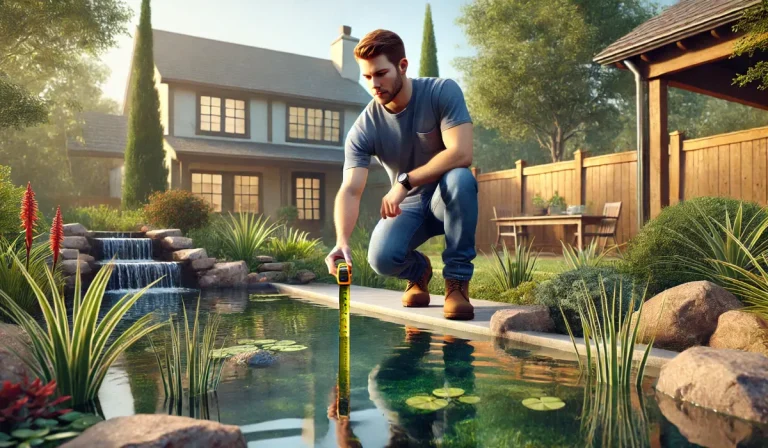
In Oklahoma, a pond depth of at least two feet (24 inches) is important for koi health and temperature stability. Deeper areas also provide refuge during heat waves and cold snaps.
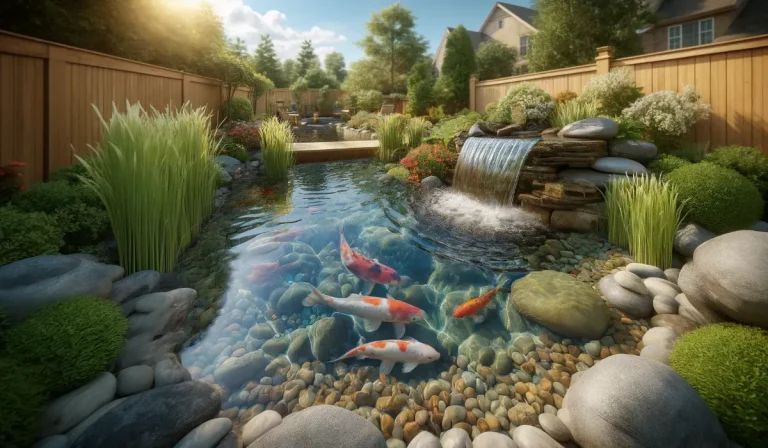
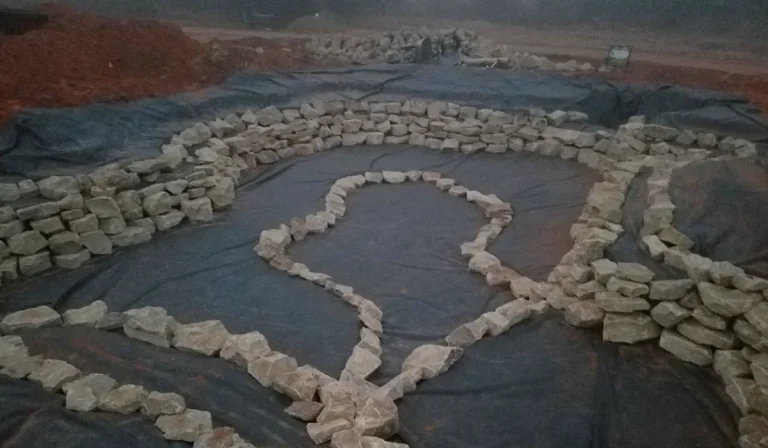
Just as important are shallow shelves around the edges, typically six to twelve inches deep. These zones give birds a place to drink and bathe, allow frogs and turtles easy access, and create natural transitions between land and water.
Even small ponds can support wildlife. The goal isn’t size, it’s variety. Multiple depths, plant zones, and access points make a bigger difference than square footage.
Know Your Local Wildlife
Common visitors to Oklahoma ponds include frogs, dragonflies, butterflies, hummingbirds, songbirds, and occasionally small mammals. Designing with these animals in mind helps create a pond that feels welcoming instead of sterile.
Designing With Wildlife in Mind
Natural Edges Make a Big Difference
Wildlife responds to ponds that look natural. Irregular edges with a mix of large stone, gravel, and aquatic plants provide traction, shelter, and visual interest.
These natural shorelines also reduce erosion and help the pond blend seamlessly into the surrounding landscape. A well-built pond should look like it belongs there, not like it was dropped in.
Protecting Your Koi
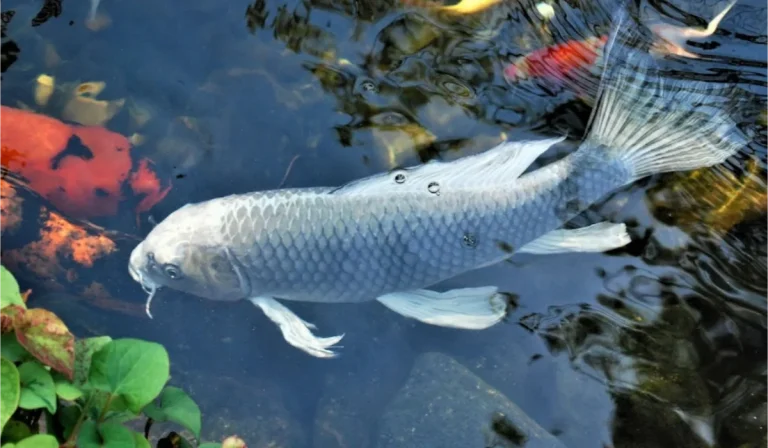
A wildlife-friendly pond still needs to keep koi safe. Predators such as herons and raccoons are part of the environment, so the pond must include protection.
Submerged rock caves, custom tunnels built during construction, and overhanging plants give koi places to retreat. Floating plants add shade and visual cover while improving the pond’s overall balance.
Selecting Native and Proven Pond Plants
Plants That Support Water Quality
Aquatic plants do much more than look good. They oxygenate the water, stabilize temperatures, and absorb excess nutrients.
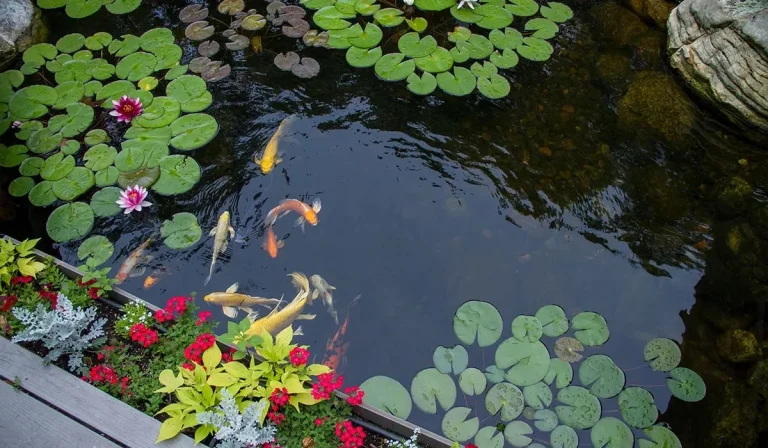
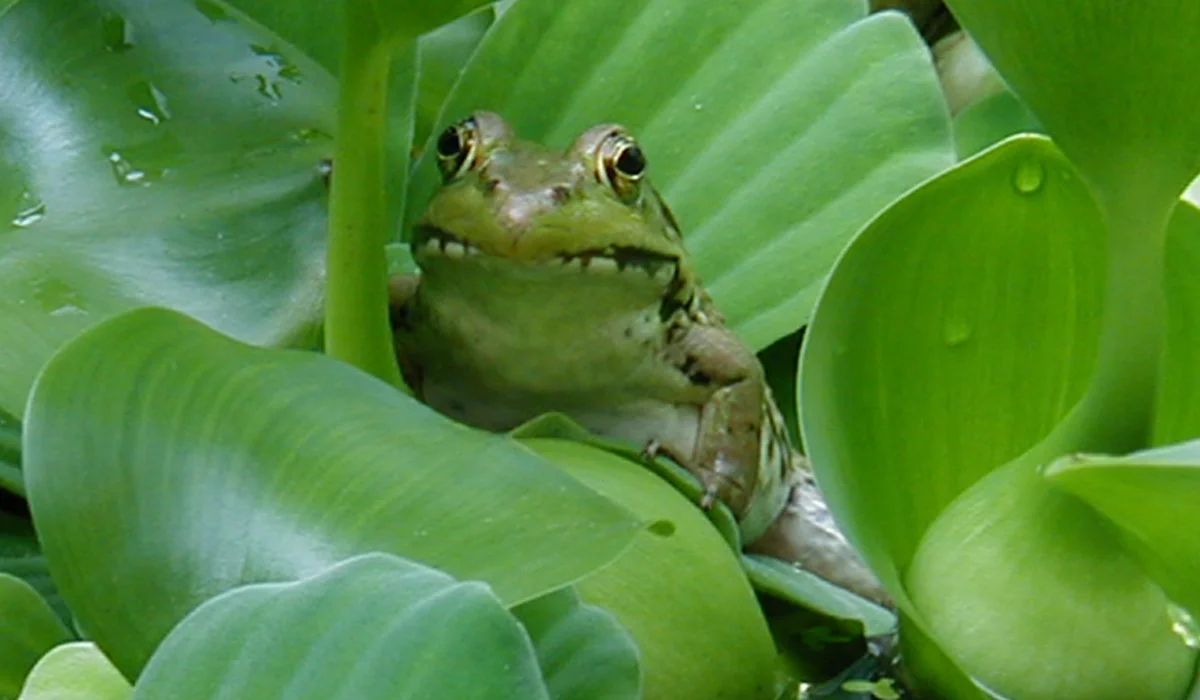
Floating plants such as water lettuce and water hyacinth provide shade and cover, while submerged plants like anacharis act as natural filters. Choosing the right mix reduces algae pressure and supports healthier fish.
We stock only plants that perform well in Oklahoma’s climate, so homeowners aren’t left guessing what will survive from season to season.
Marginal Plants for Habitat
Marginal plants around the pond edge are critical for wildlife. Irises, pickerel plants, rushes, and similar varieties provide shelter for amphibians and insects while attracting pollinators.
Layering heights creates visual depth and functional habitat. Taller plants like cattails offer cover, while low growers such as creeping Jenny soften the edges and tie the pond into the surrounding garden. That bright green creeping Jenny happens to be a favorite for a reason.
Encouraging Beneficial Wildlife
Birds
Birds are drawn to shallow water and the sound of movement. Waterfalls, streams, and gentle edges make ponds irresistible to them.
Planting nearby shrubs or flowers that produce nectar or seeds adds another layer of attraction. Tubular red flowers are especially effective for hummingbirds.
Amphibians
Frogs and toads are excellent indicators of a healthy pond. Gentle slopes, clean water, and chemical-free landscaping encourage them to settle in.
Avoid pesticides and herbicides near the pond. These products can disrupt the entire ecosystem and drive away the very wildlife most homeowners want to attract.
Helpful Insects
Dragonflies are natural mosquito control, and they thrive in ponds with vertical plants for perching. Bulrushes, cattails, and similar plants give them what they need to breed and hunt.
Flowering plants also support bees and butterflies, adding movement and color throughout the growing season.
Creating Long-Term Balance
A wildlife-friendly pond isn’t about letting things run wild. It’s about balance. Thoughtful design, proper construction, and seasonal maintenance allow koi and wildlife to coexist without constant intervention.
When done right, your pond becomes a place to slow down and observe. Birds bathing, frogs calling at dusk, dragonflies skimming the surface. These are signs of a healthy system working as intended.
Ready to Build a Pond That Feels Alive?
If you’re planning a koi pond or water feature and want it designed correctly from the start, we’re here to help. Garden Ponds Unlimited designs and builds custom ponds throughout Oklahoma, including the Oklahoma City metro, Edmond, Norman, Moore, Yukon, Mustang, and surrounding communities.
We bring decades of hands-on experience, climate-specific knowledge, and proven construction practices to every project.
Contact us today to schedule a consultation and start planning a pond that supports koi, attracts wildlife, and becomes a true centerpiece of your landscape.